The free practice tests from Transport Victoria have no limit on attempts, so it’s tempting to run through them until every clip comes out right. The trouble is that repeating a clip mostly teaches you that clip. The scenarios worth going back to are the ones that showed a gap in how you judge timing, and what you do between attempts matters more than how many attempts you make.
What the practice tests give you
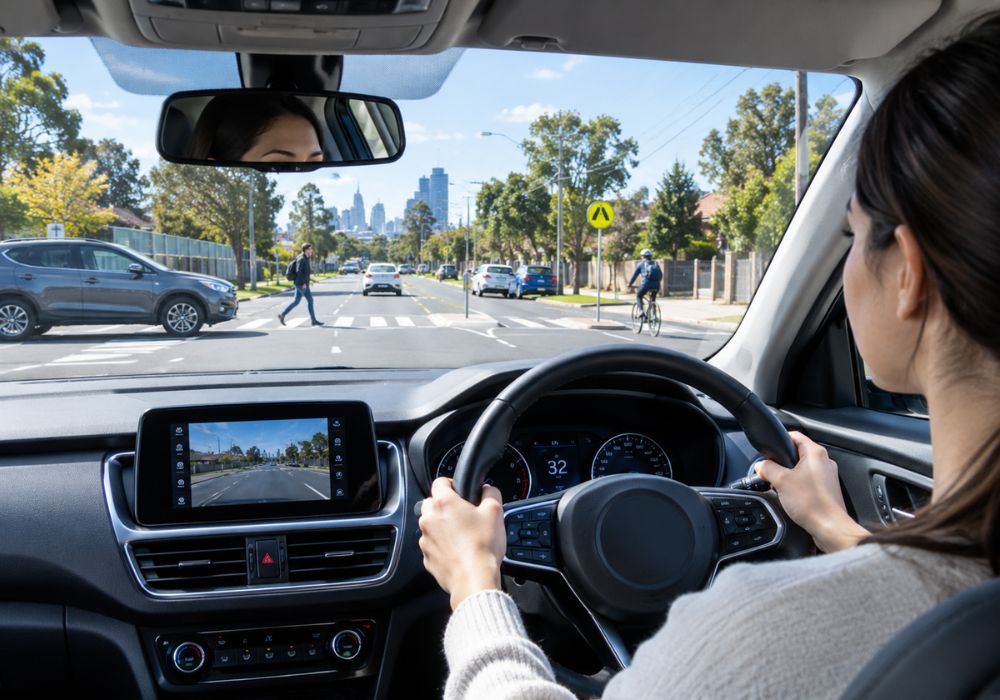
Transport Victoria offers nine free hazard perception practice tests that look just like the real test on VicRoads. The clips cover suburban streets, the city and country roads, and you can use them as often as you like.
After each scenario, the video tells you whether your response was correct or incorrect. That applies whether you acted or chose not to, which is worth remembering, because sometimes the right call is to leave it alone. You record a reaction by clicking the ‘SLOW DOWN’ button, or by tapping the space bar on a PC. If you want a fresh set of clips, the ‘refresh’ option loads a new list.
The catch is that Transport Victoria doesn’t save your results. Once you close a test, it’s gone, so keeping track of what went wrong is up to you.
Start with the ones you got wrong, but sort them first
Transport Victoria’s advice is to get more driving practice for the scenarios you answered incorrectly before you try them again. That’s sound, but it helps to work out why you got each one wrong, because different mistakes need different fixes.
If you responded before anything had changed, you probably reacted to a potential hazard, something that could go wrong, instead of one that was actually developing. The fix is patience: wait for the situation to shift before you act. If you responded too late, you likely saw the risk but hesitated, and the fix is to commit as soon as the change is clear. If you missed the hazard altogether, your eyes were probably fixed on one part of the scene, and you need to scan the whole road. And if you acted when nothing needed doing, you may have fallen into a habit of responding to everything, which means practising the discipline of letting harmless scenarios pass.
The on-screen feedback tells you that you were wrong. It rarely tells you which of these four you did. Pausing to work that out is what makes the next attempt different from the last one.
Repeat by environment, not only by clip
The practice videos cover suburban, city and country settings, so look at whether your mistakes bunch up in one of them. Most learners find one environment noticeably harder than the others.
Suburban clips tend to involve driveways, parked cars and pedestrians near the kerb. City clips bring heavier traffic, trams, cyclists and busy intersections. Country clips have longer sight lines and higher speeds, along with wildlife and vehicles or machinery coming out of side roads.
Where you learn shapes which one feels easy. If you drive around Traralgon or Morwell, suburban scenarios may feel familiar while a dense city clip doesn’t. Learners in rural spots like Yinnar often find the opposite. Whichever way it goes, an hour on your weaker environment does more for you than another go at clips you already handle well.
Don’t repeat a clip until it feels easy
After a few viewings you know what happens and roughly when. Getting it right at that point tells you about your memory, not your judgement.
A better routine is to do a full test and note every scenario you got wrong. Go back through those clips slowly and find the moment each one changed. Leave a day or two before trying them again, then refresh the list and sit a test with new clips. That last step is the real check. If you’re getting unfamiliar clips right, your judgement is improving. If you only pass the ones you’ve seen before, keep going.
Keep a simple log
Because nothing is saved, a note on your phone does the job. After each session, jot down the type of scenario, such as a car waiting at a side street or a pedestrian near parked cars, what you did, what the feedback said, and your best guess at why. After a handful of sessions, patterns tend to show up. You might notice you always jump early at junctions, or freeze whenever a cyclist appears. Those patterns are your repeat list.
Set things up so the test doesn’t trip you
Transport Victoria recommends a desktop with a widescreen monitor and advises against using a mobile phone. Check that your mouse works, your volume is on and your browser is up to date. A frozen screen or a mis-tap can look like a judgement error when it isn’t one.
How this connects to the real test
The real test shows 25 short videos and takes up to 45 minutes. You need to react appropriately by slowing down, stopping or maintaining speed, and if you don’t respond in time or make the wrong decision, you won’t pass. The VicRoads Hazard Perception Test page covers eligibility, booking and what happens if you need another attempt.
Screen practice only goes so far, because hazard perception is a driving skill first. Supervised hours build it, and our guide to the Victorian learner logbook explains how to record them. If you want to see where the test sits in the whole process, the beginner’s guide to getting a Victorian driver’s licence lays it out step by step. Overseas licence holders who need to sit the test can find the wider process on our overseas licence conversion page.
Final Thoughts
Repeat the scenarios that exposed a specific weakness, not every clip you’ve ever failed. Work out whether you were early, late, distracted or over-eager, practise that habit in real traffic, and then test yourself on clips you haven’t seen. If your log shows the same kind of mistake coming up again and again, that’s where your next practice session should start.
FAQs
Do the practice tests save my results?
No. Transport Victoria doesn’t save practice test results, so note your own mistakes as you go.
How many times can I take the practice tests?
As many times as you like. Repeating them only helps if you learn something between attempts.
Should I redo scenarios I answered correctly?
Usually once is enough. The exception is a clip where you guessed or weren’t sure why you were right. Give it a second look a day or two later.
Can I practise on my phone?
It’s possible, but Transport Victoria doesn’t recommend it. A desktop or laptop with a widescreen monitor gives a much closer match to the real test.
What happens if I don’t pass the real test?
According to VicRoads, you can attempt the test online twice in one day. After two unsuccessful attempts you wait until the next day, and each additional attempt costs $20.70. Your first online attempt is free.