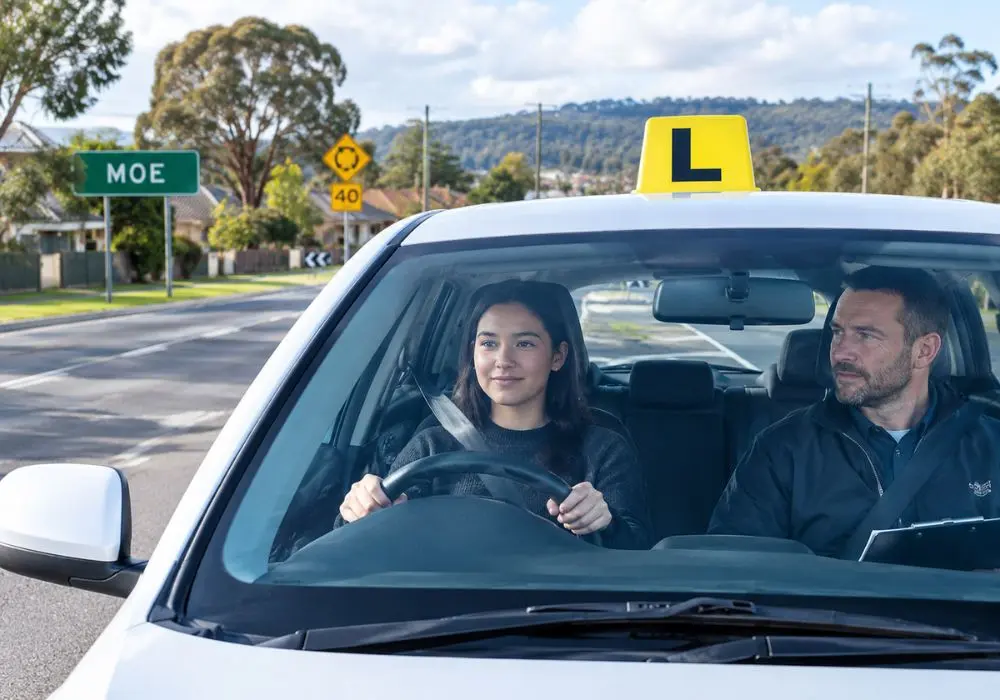
If your VicRoads drive test is booked at the Morwell Customer Service Centre, knowing which roads the test typically covers can settle your nerves and sharpen your practice. This guide walks through what the Morwell test route involves, the roads and intersections you should be comfortable with, where learners most often lose marks, and how to make the most of your preparation time.
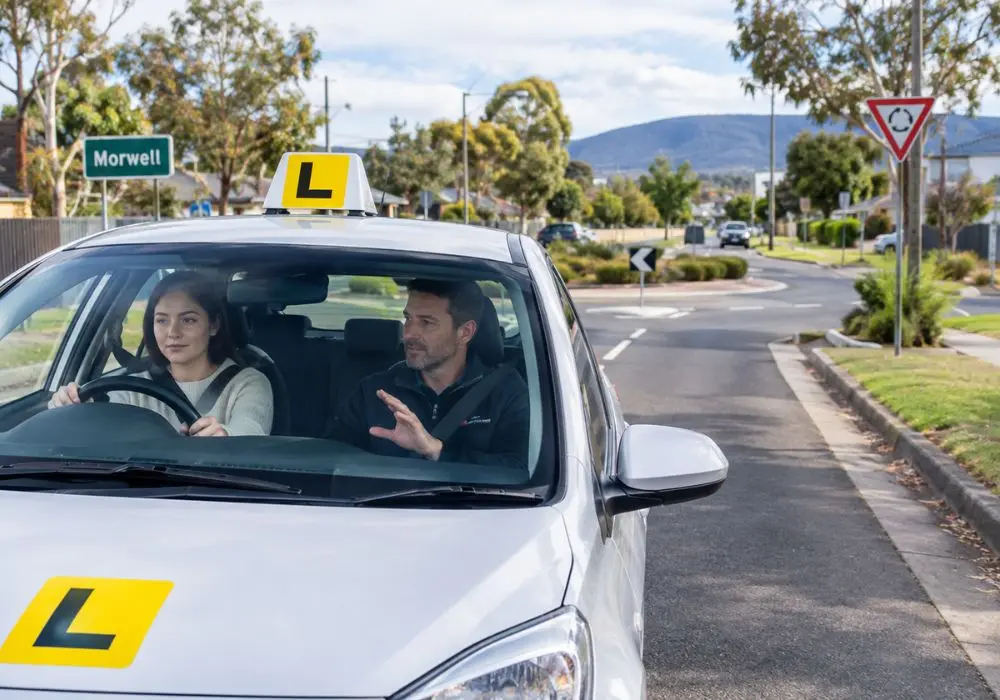
Where the Morwell Drive Test Starts
The VicRoads Customer Service Centre in Morwell is at 87 Princes Drive, Morwell VIC 3840. This is where you check in, complete the pre-drive safety check with the testing officer, and begin the on-road assessment. The test takes about 30 minutes and is split into two stages, each covering a different type of driving environment.
Roads Commonly Used on the Morwell Test Route
VicRoads does not publish its exact test routes, and the testing officer can vary the course. That said, the Morwell test consistently draws from a set of local roads. Practising on these streets gives you the best preparation for what you are likely to encounter.
Stage 1: Lower-speed residential and town streets
The first stage typically stays on quieter roads near the test centre, where speed limits sit at 50 km/h. Roads commonly included are Princes Drive (where the centre itself is located), George Street, McDonald Street, and Elgin Street. This stage focuses on your basic car control, intersection behaviour, and how well you observe your surroundings in a low-traffic environment.
If you do anything unsafe or illegal during Stage 1, the test ends immediately and you will be marked unsuccessful. So accuracy on the basics matters more than anything else in this first section.
Stage 2: Busier roads with higher speed limits
Stage 2 moves onto roads with higher speed limits and more complex traffic situations. You can expect to drive on sections of the Princes Highway (80 km/h), Tramway Road (60 km/h), Commercial Road (50 km/h), and Desailly Street (60 km/h). The testing officer will be checking how you handle lane changes, merging, speed transitions, and busier intersections.
Adjusting your speed smoothly between 50, 60 and 80 km/h zones is one of the trickier parts of Stage 2. Learners who have only practised on residential streets often find the step up to 80 km/h on the Princes Highway catches them off guard.
What the Examiner Actually Assesses
The VicRoads testing officer uses a structured scoring system. They are not looking for perfection. They are assessing whether you can drive safely and legally on your own. The main assessment areas are:
Observation — checking mirrors, doing head checks before changing lanes or pulling away, scanning intersections before entering.
Signalling — indicating at the right time and for the right duration. Too early, too late, or forgetting altogether all cost marks.
Gap selection — choosing safe gaps to enter traffic, turn across traffic, or merge. Hesitating too long is scored as a fault, just as pulling out too early would be.
Speed choice — driving at or close to the posted limit when conditions are suitable. Going well below the speed limit without reason is a common error.
Following distance — keeping a safe gap behind the car ahead. The three-second rule is what the examiner expects to see.
Lateral position — staying centred in your lane, positioning correctly for turns, and tracking smoothly through curves.
Parking — at least one parking manoeuvre is included, often a reverse parallel park or a three-point turn. Observation during parking is assessed separately from the movement itself.
For the full assessment framework, VicRoads publishes the Drive Test Criteria manual (PDF), which instructors use to prepare their students.
How to Practise the Morwell Test Routes
The most effective preparation is straightforward: drive the roads the test uses, repeatedly, in different conditions.
Start with the streets around 87 Princes Drive. Get comfortable with the intersections on George Street, McDonald Street, and Elgin Street. Pay attention to where the give-way signs and stop signs are, because muscle memory for these intersections means one less thing to think about on test day.