Most hazard perception advice is about spotting a danger and slowing down. Then a scenario tells you the driver wants to move off, and the usual approach stops making sense. There’s nothing to brake for, because the car isn’t moving.
That confusion is fair, and it comes from a real difference in what the question is asking. This guide explains what “move off” means in a hazard perception scenario and how to judge it.
The short answer
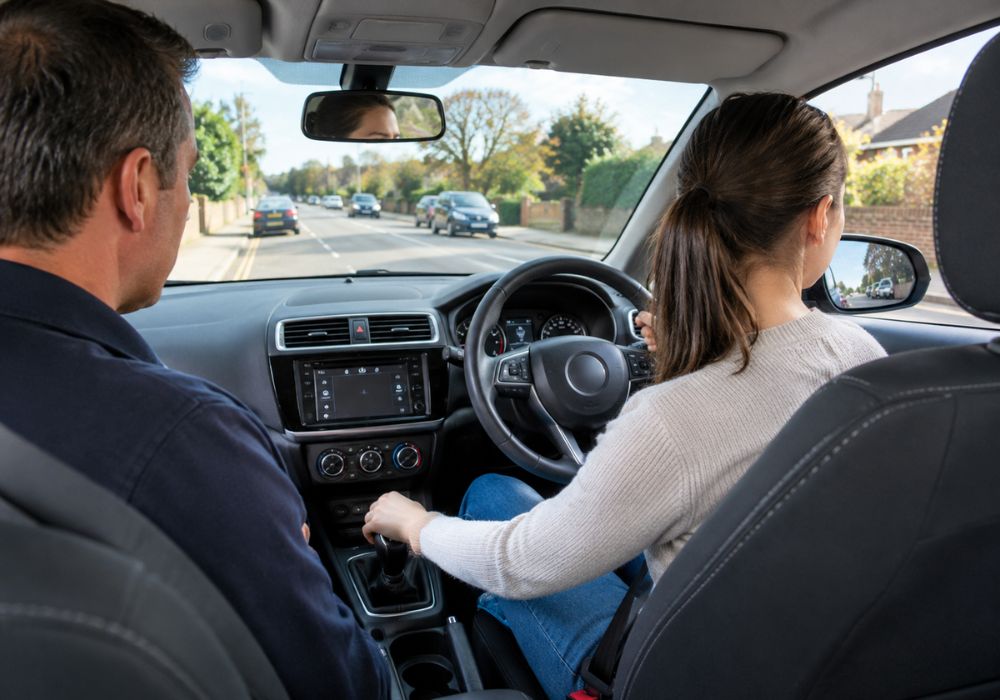
“Move off” means starting to drive from a stationary position. In a hazard perception scenario, you’re being asked whether it’s safe to go, and when. That could be pulling out from the kerb, setting off after stopping at an intersection, or moving forward from a queue.
It’s the reverse of a “slow down” scenario. There, you spot a problem and respond to it. Here, you check that there is no problem before you commit.
What the official Victorian pages say
VicRoads describes the Hazard Perception Test as 25 short videos of driving situations in which you react appropriately by slowing down, stopping or maintaining speed. If you don’t respond in time or make the wrong decision, you won’t pass.
In Victoria, “move off” is not explicitly listed as a test response. VicRoads does not publish an official scenario glossary, so exact terms should be treated with care, but the underlying core principle remains the same. When sitting the Hazard Perception Test at the Morwell VicRoads centre, scenarios outline what the driver wants to do, such as turning right, turning left, overtaking, or slowing down on Latrobe Valley roads. Your task is simply to judge the exact moment it becomes safe to take action, or to do nothing if a safe gap never appears.
The safest habit is to read the instruction at the start of each Victorian scenario and take it literally. If it tells you what the driver intends, that intention is the question you’re answering.
How a move-off decision differs
| Scenario type | The question | What a good driver does |
| Slow down | Is something developing that needs a lower speed? | Respond once the situation changes |
| Move off | Is it clear and safe to start moving? | Wait until the way is clear, then go |
In a move-off situation, the risky habit is impatience. Many learners want to show they’re decisive, so they respond the second the scene starts. In a real car, that’s how you pull into the path of a cyclist you didn’t see or a vehicle approaching faster than you judged.
What to check before you move off
Think through the same routine you use in the driver’s seat. VicRoads teaches a simple three-step approach: See, Think, Do. Scan for hazards, plan your response, then act.
For a move-off scenario, that looks like:
- See: Look in every direction the situation demands. Traffic from both sides, pedestrians near the kerb, cyclists, vehicles turning in from side streets.
- Think: Work out the gap. Is the road clear far enough for you to move off and reach a safe speed?
- Do: Only act once the gap is genuinely there, not when you hope it will be.
Some examples of what should make you hesitate:
- A vehicle approaching from a distance that looks slow but is closing quickly.
- A pedestrian or cyclist who is about to enter your path.
- A parked car blocking your view of the road.
- Another vehicle that’s also moving off or turning at the same intersection.
If any of those are live when you would set off, the answer may be to hold and wait.
Waiting can be the right answer
This is the part that catches people out. Transport Victoria’s practice tests let you choose to act in each scenario, and the feedback tells you whether your action or non-action was correct. So doing nothing is sometimes the correct response, particularly if going would be unsafe at that moment.
The catch is that waiting forever isn’t right either, because VicRoads says you fail if you don’t respond in time. The skill is to wait while it’s unsafe, then commit as soon as it’s clear. That’s the same timing judgement as every other hazard scenario, just applied to starting instead of slowing.
Common mistakes
- Going on the first frame. Reacting before you’ve looked at the whole scene.
- Only checking one direction. Fixing on the nearest vehicle and missing a cyclist or pedestrian.
- Freezing. Being so cautious that you never commit when the road is clear.
- Treating every scenario the same. Reaching for the “slow down” reflex when the question is about starting.
How to practise move-off decisions
Use the free practice tests and, after each scenario, ask what the feedback is telling you about your timing. Then take it into the car. Supervised driving is the best place to practise moving off, and the Victorian learner logbook guide explains how those hours are recorded. Ask your supervisor to quiz you at intersections and kerbs: “Is it clear? How do you know?” Explaining your reasoning out loud sharpens the same judgement the test measures.
If you’re working towards your P plates, the beginner’s guide to getting a Victorian driver’s licence shows where the HPT sits in the process. Converting an overseas licence? Some holders also need to sit it, and the overseas licence conversion page explains the wider process.
FAQs
Is “move off” an official response button in the Victorian HPT?
VicRoads lists the responses as slowing down, stopping or maintaining speed, and doesn’t publish a list of scenario wording. Read the on-screen instruction in each scenario and answer that question. The practice tests use a ‘SLOW DOWN’ button, so check how each scenario asks you to respond.
If the road is clear, should I still wait?
No. If it’s safe to go, go. Unnecessary hesitation can count as not responding in time, and VicRoads says that means you won’t pass.
How many times can I sit the test in one day?
Online, you can attempt the test twice in one day. After two unsuccessful attempts, you need to wait until the next day. Your first online attempt is free, and each new attempt costs $20.70.
Where can I practise safely before the real test?
Transport Victoria offers nine free practice tests that look like the real thing. You can use them as many times as you like, though your results aren’t saved.