Most automatic versus manual guides are written for someone driving to the shops in suburban traffic. That’s not the same test as a gravel shoulder near Koo Wee Rup, a fogged-up morning on the way to Pakenham, or a mob of sheep crossing somewhere past Bunyip. Regional and semi-rural Victorian roads ask different things of a learner, and the transmission choice matters more out there than most guides let on.
This is a straight comparison built specifically around those conditions, not generic city traffic.
Why Regional Roads Change the Calculation
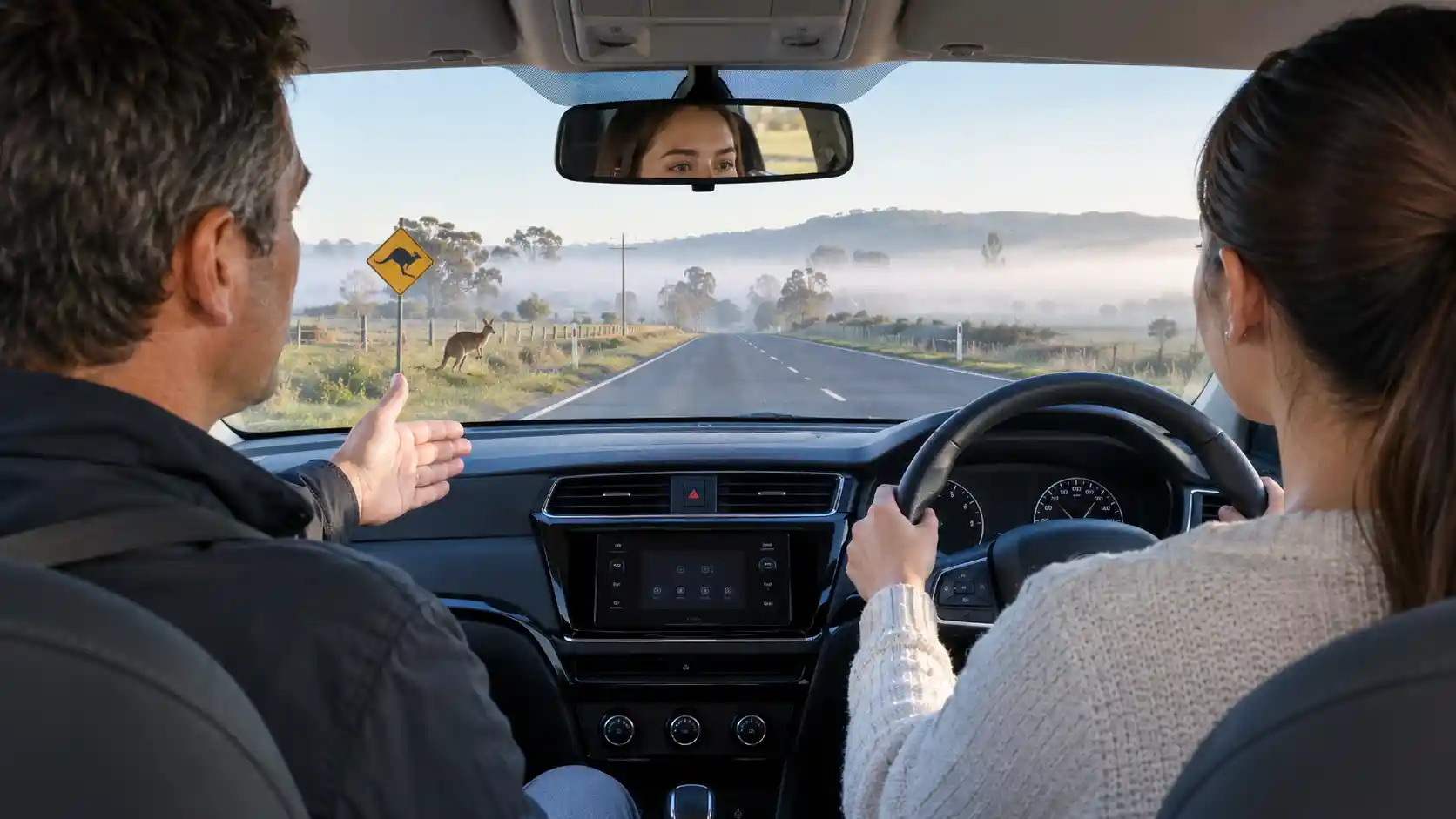
City driving lessons are mostly about traffic management: gap selection, lane changes, roundabout timing. Regional roads in Victoria’s outer south-east and beyond ask for something else entirely: long stretches at 100 km/h with no lighting at night, unsealed shoulders that shift under a tyre if you drift wide, and wildlife that doesn’t read road signs.
None of that disappears because a car shifts its own gears. But the workload changes depending on which transmission a learner is in, and that’s the part most comparisons skip.
Automatic Lessons on Open Roads
| What Comes Up | How Automatic Handles It |
| Sustained 100 km/h cruising | No clutch fatigue, consistent speed |
| Sudden braking for wildlife | One pedal, faster reaction |
| Gravel shoulder recovery | Full attention free for steering |
| Long, low-traffic stretches | Less to manage, more to watch the road |
An automatic vehicle takes the friction out of driving right where regional roads demand your complete attention. Without a clutch to manage, you can react instantly if wildlife jumps out at dusk or handle loose gravel without the risk of stalling. For a learner building confidence, our automatic driving lessons remove unnecessary mechanical stress so you can focus entirely on road awareness and vehicle control where reaction time matters most.
Manual Lessons on Open Roads
Manual isn’t worse out here, it’s just a different skill set. Engine braking down a long country grade saves your brakes on descents that go for a kilometre or more. Automatic drivers rarely think about this until they’re riding the brake pedal the whole way down. Manual also gives finer control on loose surfaces. A touch of clutch slip can stop a small correction turning into a big one.
The trade-off is workload. A learner managing gear changes, clutch control and a sudden hazard all at once has a lot more to juggle than someone who just needs to brake and steer.
The Licence Restriction Most Learners Forget About
Regional learners often miss the hidden trade-off of test day. If you pass your VicRoads drive test in an automatic vehicle, your probationary licence carries an A condition restriction, limiting you strictly to automatic cars.
Victoria automatically lifts this restriction once your probationary period ends, unlike states like Queensland that require a fresh practical test to upgrade. However, waiting up to four years for your full licence is a major setback if you need to drive a manual ute for farm work, operate fleet vehicles, or drive for a trade. Passing your test in a manual from day one eliminates the restriction immediately, giving you complete driving flexibility across regional roads.
A Quick Comparison for Regional Conditions
| Factor | Automatic | Manual |
| Wildlife braking response | Faster, one pedal | Slower, clutch involved |
| Long descents | Relies on brakes | Engine braking saves brakes |
| Gravel shoulder control | Full focus on steering | More control, more to manage |
| Licence restriction | A condition until full licence | No restriction |
| Learning curve | Shorter | Longer, more to master early |
What Really Matters More Than Transmission
Regional roads reward specific practice. Driving in low light without streetlights, judging distance on a road with no painted centre line, and reacting to wildlife at the roadside are skills suburban lessons skip entirely, leaving the jump to open-road conditions bigger than most learners expect.
Closing that gap requires targeted, local route experience before you step up for your assessment. Tailoring your training with focused driving test preparation ensures you master these regional challenges and meet every examiner standard with absolute confidence.
Automatic vs Manual Driving Lessons: Which One Should You Choose
Go automatic if you’re nervous, want a shorter path to your licence, or your family mostly drives automatic vehicles anyway. The reduced mental load matters more on open roads than in the city, since a sudden hazard demands a faster, simpler response.
Go manual if you’ll eventually need to drive a manual ute, tractor, or farm vehicle, or if you specifically want engine braking control for long descents. It takes longer to master, but it removes the licence restriction straight away and you’ll build skills that are genuinely useful for rural and semi-rural work.
Either way, book lessons that actually cover the conditions you’ll be driving in, not just suburban loops repeated until test day. A few sessions on the open, lower-traffic roads heading out toward the Pakenham and Koo Wee Rup corridor will do more for genuine readiness than another twenty minutes around a quiet housing estate.